Billionaire RoadWhere the hours went
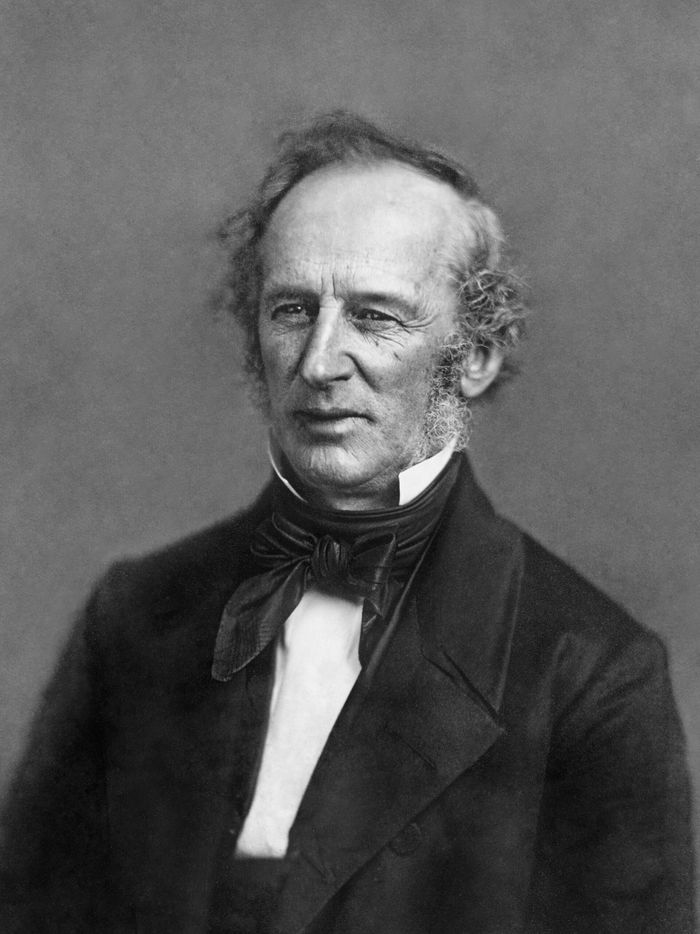
Cornelius Vanderbilt, daguerreotype

Born 1794. Died 1877.

Cornelius Vanderbilt

Where the hours went: On the water.

He quit school at eleven to work his father's boat.
He spent the next sixty years at the helm.
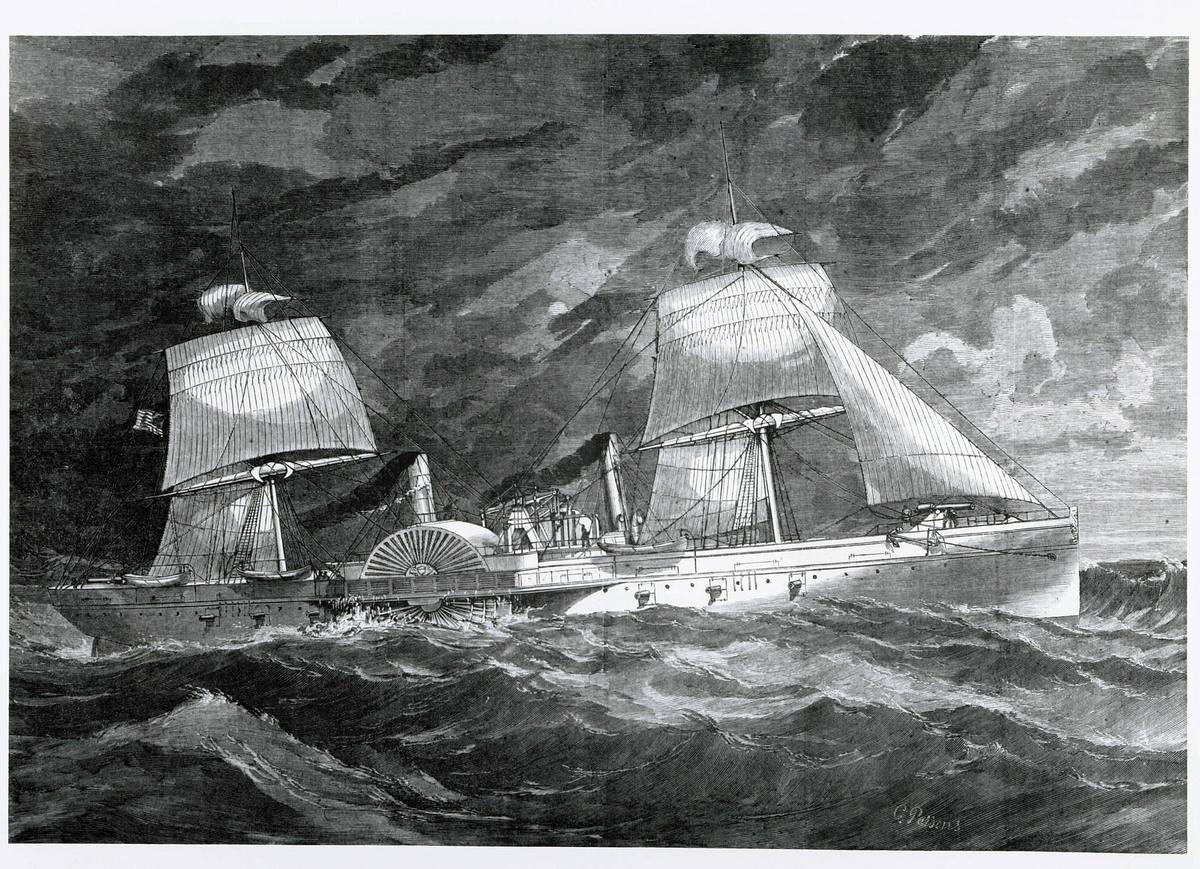
The steamship Vanderbilt under sail and steam in heavy seas
G. Parsons, the steamship Vanderbilt, engraving in Harper's Weekly, 1862. Public domain, via Wikimedia Commons.

Most men think the titans got there on talent.
They got there on where the hours went.

01The boat at sixteen

In 1810 he bought his own periauger, a flat sailing barge, with one hundred dollars from his mother.
He ran passengers and freight across New York harbor, Staten Island to Manhattan.
In the War of 1812 he won an Army contract to carry supplies to the forts around the harbor.[1][3]

02Another man's steamboat

In his twenties he went to work captaining steamboats for Thomas Gibbons.
Sail was what he knew.
Steam was where the river was going, so that is where his hours went.[1]

03The fight for the river

New York had handed one company the right to run steamboats on its waters.
Vanderbilt ran Gibbons's boats anyway and slipped the men sent to arrest him.
In 1824 the Supreme Court ruled for Gibbons in Gibbons v. Ogden and the river opened.[1][4][2]

04Seventy and starting over

In 1863, near seventy, he took control of his first railroad.
The Harlem in 1863, the Hudson River line in 1864, the New York Central in 1867.
He did not retire into what he had already mastered.[1]

05What he left

He died in January 1877 with a fortune of about one hundred million dollars.
Most of it went to one son, William Henry.[1][3]

His years

Every year the record allows, with its source.

1805At 11

He quit school to work on his father's boat.[3]

1810At 16

He bought his own periauger and ran New York harbor.[1][3]

1812At 18

He was carrying Army supplies to the harbor forts in the War of 1812.[1][3]

1817At 23

He went to work captaining Thomas Gibbons's steamboats.[1][5][6]

1824At 29

He kept Gibbons's boats running until the Supreme Court opened the river.[1][2][4]

1829At 35

He left Gibbons's company and ran his own steamboat line.[1][5][6]

1833At 39

He nearly died in one of the first railroad wrecks, at Hightstown.[1][5]

1834At 40

His People's Line fought the Hudson River monopoly until it paid him to leave.[1][5]

1838At 44

He took over the Staten Island ferry.[1][5]

1839At 45

By the end of the decade he ruled the steamboats of Long Island Sound.[1][5]

1840sIn the 1840s, near fifty

He was cutting fares to drive down the Stonington railroad and take it over.[1][5]

1847At 53

He became president of the Stonington, the first of many railroads he would run.[1][5]

1849At 55

The Gold Rush began and he moved from river boats to ocean steamships.[1][5]

1851At 57

His steamers opened a route to California across Nicaragua, shorter than Panama.[1][5][6]

1853At 58

He took his family to Europe on the North Star, a steamship he built.[1][8]

1856At 62

He fought William Walker for the Nicaragua route and backed Costa Rica against him.[1][5]

1862At 67

He gave his largest steamship, the Vanderbilt, to the Union Navy.[5][7]

1863At 68

He took control of the Harlem railroad in a famous stock corner.[1][5]

1864At 70

He bought the Hudson River line and sold his last ships.[1][5]

1867At 73

He took control of the New York Central.[1][5]

1868At 74

He fought Drew, Gould and Fisk for the Erie.[1][5][6]

1870At 76

He joined his lines into one of the first giant American corporations.[1][5]

1871At 77

Grand Central Depot opened as the end of his lines.[5][6]

1873At 78

His gift founded what became Vanderbilt University.[6][7]

1877At 82

He died in New York, at eighty two.[1][5]

Mathew Brady studio, Cornelius Vanderbilt, between 1844 and 1860. Public domain, via Wikimedia Commons.

Where his hours went

On the water, at the helm.
On the next machine, before the last one wore out.
On the fight right in front of him.

See where your hours go.

A week is 168 hours.
One minute to see where yours went.

Count your 168 →

See what he was doing at your age →

See how much freedom your money buys →

Sources

  1. T. J. Stiles, The First Tycoon: The Epic Life of Cornelius Vanderbilt (Knopf, 2009), chapters 1 to 3 on the harbor and Gibbons years, pages 365 to 442 on the railroads. Pulitzer Prize for Biography, 2010.
  2. Gibbons v. Ogden, 22 U.S. 1 (1824), Supreme Court of the United States.
  3. Encyclopedia of World Biography, Cornelius Vanderbilt (Gale, via Encyclopedia.com): school at eleven, the one hundred dollars, the War of 1812 contract, the estate.
  4. John T. Flynn, Men of Wealth (Simon and Schuster, 1941), chapter on Vanderbilt: the process servers he evaded while running the Bellona.
  5. Wikipedia, Cornelius Vanderbilt, with its notes to Stiles: Gibbons in 1817 (pages 9 to 35), his own line, Hightstown (90 to 91), the People's Line (99 to 104), Long Island Sound and the Stonington (119 to 146), the Gold Rush and Nicaragua (174 to 205), Walker (268 to 327), the Civil War gift (341 to 364), the railroads (365 to 442).
  6. History.com, Cornelius Vanderbilt: Gibbons, his own line in the late 1820s, the Nicaragua route, the Erie war of 1868, Grand Central Depot in 1871, the 1873 gift.
  7. Vanderbilt University News, The Commodore's Civil War (2011): the ship given in March 1862, the gold medal of 1864, the 1873 endowment. Naval History and Heritage Command, Dictionary of American Naval Fighting Ships, Vanderbilt.
  8. Scientific American, The Steam Yacht North Star (June 18, 1853), and the University of Victoria, North Star, 1853 to 1866: the family voyage to Europe.